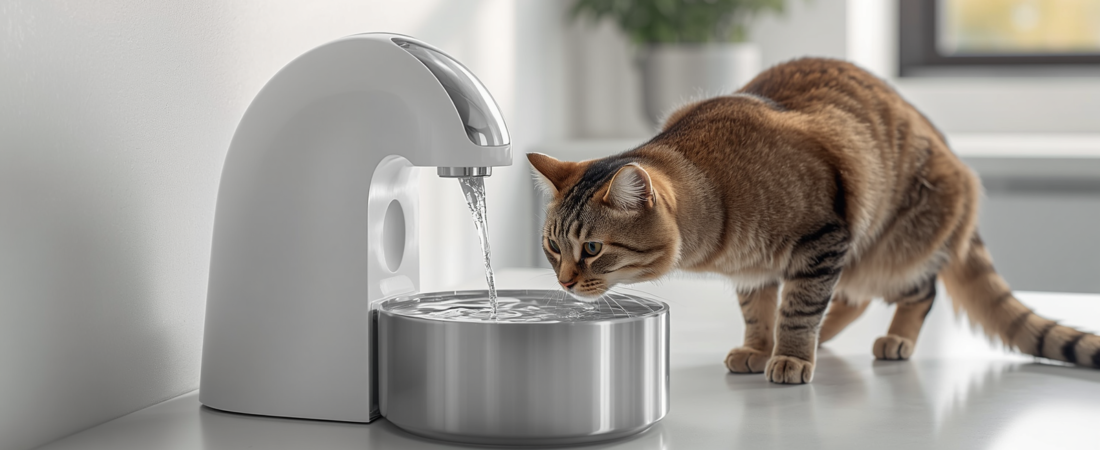
Access to clean, fresh water is a basic need for any pet, but how that water is offered has a greater impact on how much the animal actually drinks than many owners realize. Smart water bowls and connected water fountains have transformed something as simple as a water dish into a health monitoring device that can alert you when your cat has been drinking less than usual for days—an early sign of potential kidney problems.
Why the design of the drinking fountain matters so much
Cats are descended from desert felines that obtained almost all of their hydration from the prey they hunted. Their thirst instinct is naturally low, and they prefer moving water, which they evolutionarily associate with fresher, contaminant-free water. A bowl of stagnant water is simply unappealing to many cats.
Dogs are more flexible regarding their water source, but they also benefit from consistently clean water at a suitable temperature. In summer, a bowl of water heated by the sun can discourage a dog from drinking enough.
Types of smart drinking fountains
Basic circulating water sources
Entry-level options: fountains with a pump that keeps the water constantly moving, usually with an activated carbon filter that removes chlorine and improves the taste. They don’t have connectivity, but they already represent a huge improvement over a static bowl. Price: €20-40.
WiFi sources with app
The intermediate and most popular level in 2026. They connect to the home network and allow you to control the flow from your mobile phone, schedule circulation times, view the water level in real time, and receive alerts when the tank is low or the filter needs changing. Price: 40-80 euros.
Sources with health monitoring
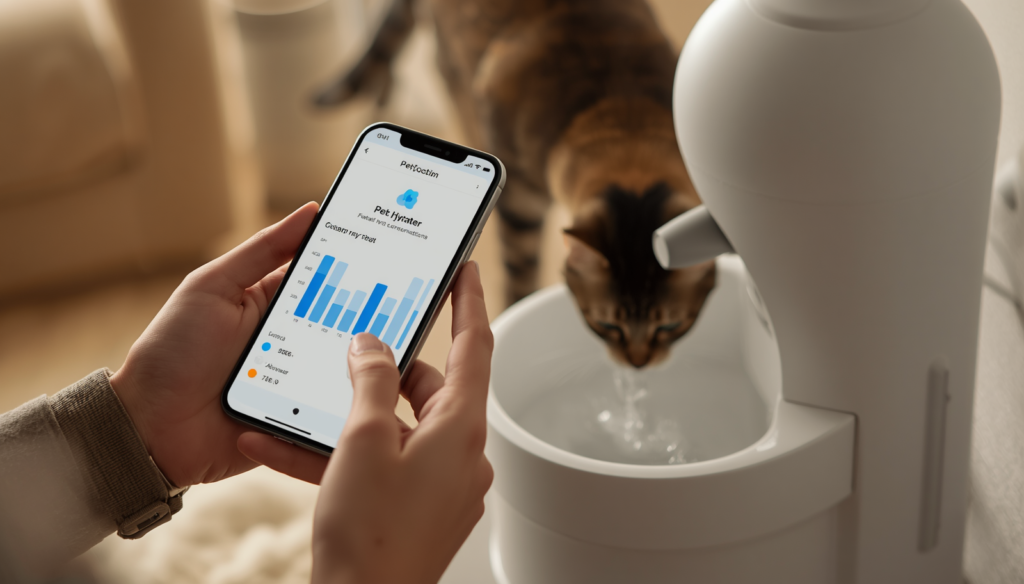
The most advanced level: These systems incorporate sensors that record how much each animal drinks (some with facial recognition), monitor water quality, and generate hydration reports. Integrated into ecosystems like PETKIT, they share data with the central app, along with data from the feeder and litter box, to build a complete health profile. Price: €60-120.
The best smart water fountains of 2026
PETKIT Eversweet Ultra — The most advanced
Unveiled at CES 2016, the PETKIT Eversweet Ultra features a facial recognition camera for each pet, a water temperature sensor, a triple-layer filter, a quiet motor (less than 30 dB), and individual consumption monitoring for multi-pet households. It integrates with the PETKIT ecosystem to share data with the feeder and litter box. The app generates alerts if it detects a significant decrease in consumption. Price: €65-80.
Catit Pixi Smart — The best for cats
Designed specifically for cats, the Catit Pixi Smart features a compact design, four adjustable water flow modes, an app that monitors water level and quality, and filter change reminders. The material is completely BPA-free, and the motor is virtually silent. Price: €45-55.
Petlibro Capsule One — The best value for money
The Petlibro Capsule One offers Wi-Fi connectivity, an app with low-level alerts, a high-capacity activated carbon filter, and a minimalist design in stainless steel and BPA-free plastic. It’s compatible with Alexa. At under €45, it’s the best option for those looking for their first smart water fountain. Price: €35-45.
Drinkwell Pagoda — The best no-app drink for large dogs
For pet owners who don’t want apps but do want the benefits of circulating water, the PetSafe Drinkwell Pagoda offers an elegant ceramic design, a two-level flow that oxygenates the water, and a 2.3-liter capacity. It lacks connectivity but is very reliable and easy to clean. Price: €50-65.
What to look for before you buy
Easy to clean
This is the most important and most overlooked criterion. A dish with parts that are difficult to disassemble or that aren’t dishwasher-safe quickly accumulates biofilm and bacteria. Prioritize models with few parts, all of which are removable and dishwasher-safe.
Engine noise level
A noisy motor can deter nervous cats from approaching the fountain. The best models operate below 35 dB, practically inaudible. Always check this information in the specifications before buying.
Tank capacity
For a single cat, 1.5 liters is enough for 1-2 days. For households with multiple pets or if you travel frequently, choose models with 2.5 liters or more. Some models have a transparent reservoir that allows you to easily see the water level.
Maintenance: the key to making them work well
The biggest mistake with water fountains is not cleaning them often enough. Biofilm, that sticky film that forms inside, can appear in 3-5 days in warm conditions. A thorough cleaning of all parts should be done at least once a week. The activated carbon filter should be changed every 2-4 weeks, according to the manufacturer’s instructions.
Conclusion
A smart water fountain is one of the best investments you can make to improve your pet’s health, especially if you have cats. The difference in water consumption between a static bowl and a circulating fountain can be 30-50%. And if you add consumption monitoring, you have an early detection tool for kidney problems that could save your pet’s life.
Frequently asked questions
How often should the water be changed?
With a circulating water source and active filter, a complete water change every 2-3 days is sufficient. Without a filter, change the water daily. Even if the water appears clean, bacteria accumulate rapidly in a humid environment.
Does the power supply work if the power goes out?
No, electrical outlets shut off when there’s no power. For situations involving a prolonged power outage, always keep a bowl of water on hand as a backup.
Are ceramic dishes better than plastic ones?
Ceramic and stainless steel are better than plastic because they don’t absorb odors or release chemicals over time. Some cats also prefer to drink from natural materials. If you have a cat with feline acne, plastic can make it worse.
Can my dog use the same water fountain as the cat?
Technically yes, but it can lead to territorial disputes in some households. If you have both species, consider having a separate water fountain for each in different areas of the house.
Posts relacionados
Homes with predictive AI for pets: when the house learns before you do
May 26 , 2026
Self-learning assistants: how predictive AI is taking home automation beyond manual programming to create homes that adapt to each pet's…
Read moreHow to save energy with home automation

May 26 , 2026
The electricity bill remains one of the biggest fixed household expenses. And while it's impossible to eliminate it, home automation…
Read more