
The wearables revolution, those devices we wear on our wrists to measure steps, heart rate and sleep quality, has arrived in the world of pets with an equally ambitious proposal: to know the health status of your dog or cat continuously, detect abnormalities before they become serious problems and have an objective view of their well-being day by day.
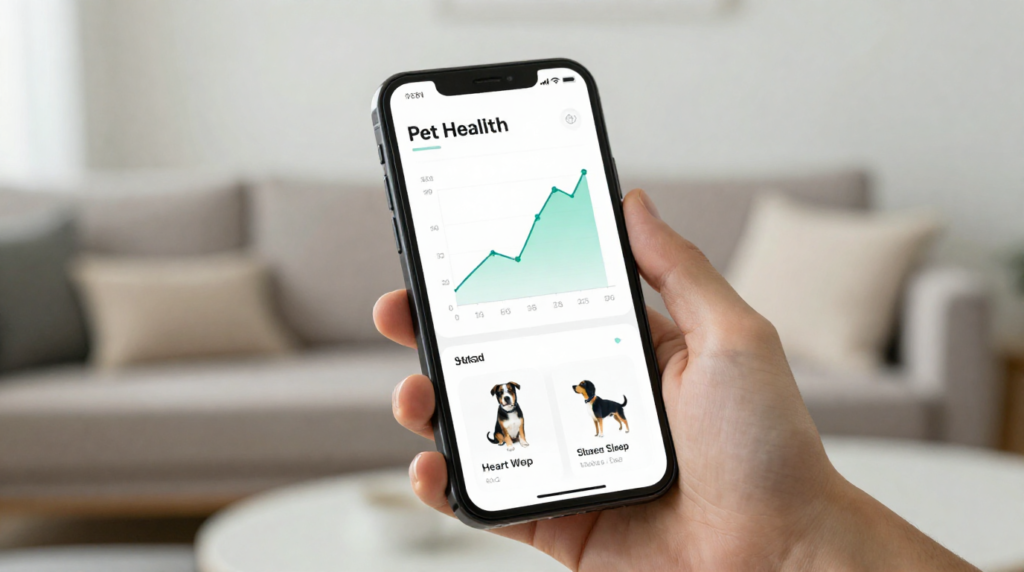
By 2026, the pet wearable market has matured significantly. It’s no longer just about basic GPS trackers or pedometers. More advanced devices monitor heart rate, body temperature, sleep quality, stress levels, and even behavioral patterns that can indicate the onset of illness before visible symptoms appear.
What will pet wearables measure in 2026?
Physical activity and steps
The most basic and widespread function. All pet wearables count steps, classify activity as resting, light activity, active play, and sleep, and compare the data with the animal’s own history or with breed-specific references. Knowing that your dog has reduced its daily activity by 40% for three consecutive days could be the signal to take it to the vet in time.
Heart and respiratory rate
The most advanced models, such as the Invoxia Pet Tracker or the Whistle Health 3, incorporate sensors that detect the animal’s heart and respiratory rate in real time. AI analyzes the patterns and alerts you when the values deviate from the normal ranges for that specific animal. This is especially valuable for breeds with a predisposition to heart problems, such as the Cavalier King Charles Spaniel or the Boxer.
Sleep quality
Sleep analysis in pets is one of the most recent advances. Devices detect sleep cycles, identify whether the animal wakes up frequently during the night, and quantify deep versus light sleep. Changes in sleep patterns are often the first indicators of chronic pain, anxiety, or systemic illness.
Body temperature
Some models include a temperature sensor that alerts if the animal has a fever, especially useful on extremely hot days or if the animal has been left in an enclosed space.
The best wearables for pets in 2026
Fi Series 3 — The most complete for dogs
The Fi Series 3 remains the market benchmark in 2026. It combines high-precision GPS with detailed activity tracking, sleep analysis, up to 3 months of battery life in power-saving mode, and an app with social features that allow you to compare your dog’s activity with others of the same breed. The design is elegant, and the collar is water-resistant. Price: €150 plus an annual subscription.
Invoxia Pet Tracker — The best in cardiovascular health
The Invoxia is the most advanced device for real-time health monitoring. Its heart rate and respiratory sensor has been clinically validated and can detect arrhythmias, persistent tachycardia, and changes in breathing patterns with remarkable accuracy. Ideal for senior dogs or breeds with heart conditions. Price: €99 plus monthly subscription.
Tractive GPS Dog 4 — The best value for money
Already well-known in the market, the Tractive Dog 4 adds new health monitoring features to its flagship GPS in 2026. The app now includes sleep analysis, estimated calorie counting, and behavioral change alerts. Price: €50 plus a subscription starting at €4.99 per month.
Felcana Go — The best for cats
Designed specifically for cats, the Felcana Go is lightweight, comfortable, and monitors activity, sleep, and behavior using algorithms specifically trained for felines. Compatible with a safety release collar. Price: €80.
Current limitations of pet wearables
While the progress is remarkable, pet wearables have significant limitations that should be considered. The accuracy of heart rate sensors in animals with thick or dense fur can be affected. The algorithms are primarily trained on data from common breeds, which can reduce their accuracy in less common breeds.
Furthermore, no wearable device can replace veterinary diagnosis. Its function is to detect warning signs and provide contextual data to the veterinarian, not to diagnose diseases. Any abnormality detected by the device must be evaluated by a professional.
Conclusion
Pet wearables have evolved from novelty gadgets to preventative health tools with real clinical value. For owners committed to their animals’ well-being, especially those with predisposed breeds or senior pets, they represent an investment that can make a real difference in the early detection of health problems.
Frequently asked questions
Are pet wearables heavy?
Current models weigh between 20 and 40 grams, similar to a two-euro coin. They are suitable for dogs over 4-5 kg. For very small breeds or cats, look for models specifically designed for lighter weights.
Are pet wearables waterproof?
Most are IP67 or IP68 certified, meaning they are water-resistant and can withstand immersion. Always check the specific certification before purchasing.
Do I need a subscription for all wearables?
Those that include GPS do require a mobile data subscription. Those that only monitor activity without GPS usually work without a subscription, transmitting data via Bluetooth to your phone when nearby.
Is heart rate data accurate in pets?
Clinically validated models like Invoxia have an accuracy of 85-90% under normal conditions. They do not have diagnostic medical accuracy but are reliable enough to detect trends and significant changes.
Posts relacionados
AI agents for pets: the next revolution in autonomous animal care
May 26 , 2026
Beyond voice assistants: how autonomous AI agents are redefining what it means to care for a pet in the digital…
Read moreTop robot vacuum cleaners for pet hair

May 26 , 2026
If you have a dog or cat, you already know what it's like to find fur on the sofa, carpet,…
Read more