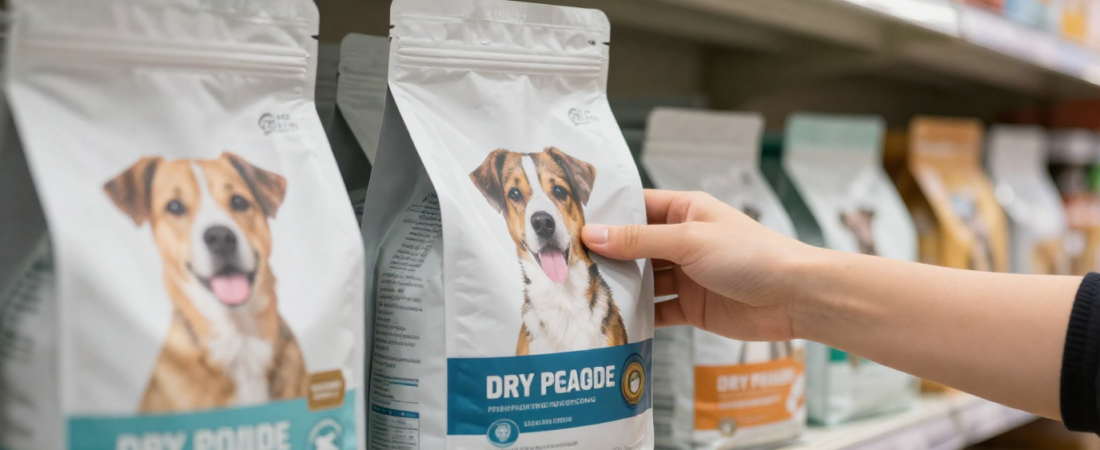
Walking into a pet store or opening Amazon with the intention of buying pet food can be overwhelming. Hundreds of options with similar promises on the packaging, prices ranging from €15 to €120 per bag, and a nutritional label that seems designed to confuse. Knowing how to read that label and understand what makes it good or bad is the most useful skill a modern pet owner can develop.
How to read a pet food label
List of ingredients: the order matters
Ingredients are listed in order of weight before cooking, from heaviest to lightest. The first ingredient should be a specific animal protein: ‘chicken’, ‘salmon’, ‘lamb’. Be wary of labels that say ‘poultry derivatives’ or ‘animal protein’ without specifying the species, as these are generic terms that may include lower-quality cuts.
The second and third ingredients are also important. If several different grains, such as corn, wheat flour, and rice, appear after the main protein, they may collectively represent more weight than the protein, even though they are listed separately further down the ingredient list. This technique is called ingredient splitting and is used by some manufacturers to make the protein appear first when, in reality, the grains are the main component.
Percentages of protein, fat, and fiber
For active adult dogs, look for a minimum of 25-28% protein and 12-15% fat. For cats, being obligate carnivores, the minimum recommended intake is 30-35% protein and 15-20% fat. Food with less than 26% protein is nutritionally insufficient for an adult cat in the long run.
Crude fiber should be between 2% and 5% for most healthy adults. Higher values (8-15%) correspond to weight control or digestive feeds.
Ingredients to look for
- Fresh or dehydrated meat of a specific species such as chicken, beef, salmon or turkey.
- High-quality oils: salmon oil, flaxseed oil, or sunflower oil for omega-3 and omega-6.
- Vegetables and fruits: carrots, spinach, blueberries, which provide natural antioxidants.
- Prebiotics such as fructooligosaccharides or chicory extract for intestinal health.
- No artificial colors: the colors in the feed are for the human eye, not for the animal.
Ingredients to avoid or limit
- BHA, BHT and ethoxyquin: artificial preservatives linked to long-term health problems.
- Sugar, corn syrup or molasses: they provide no nutritional value and contribute to obesity.
- Meal made from poultry by-products or meat without specifying the species of origin.
- Artificial colorings such as E102, E110, E122 or E129.
- Salt added in large quantities.
Types of feed by range
Economic range (less than €2/kg)
It meets the minimum legal requirements but often contains high percentages of grains, non-specific by-products, and artificial preservatives. It may be a temporary emergency option but is not recommended as a long-term main diet.
Mid-range (€2-5/kg)
The most balanced option for most pets. Brands like Purina Pro Plan, Royal Canin, Orijen, Acana, and Taste of the Wild offer a good balance between ingredient quality, nutritional research, and price in this range. They are the most recommended by veterinarians under normal circumstances.
Premium and super-premium range (more than €5/kg)
Higher quality ingredients, often grain-free, with proteins from specific sources and no artificial preservatives. Brands like Orijen, Acana, Carnilove, and Farmina N&D fall into this category. They aren’t always necessary for all animals, but they can make a real difference for pets with food sensitivities.
I feed for breeds, sizes and life stages
Dog food formulated for breed size (mini, medium, maxi) isn’t just marketing. Appropriately sized kibble makes chewing easier, and the calorie density is tailored to the metabolism of each size. A giant breed dog needs food that controls its growth rate to protect its joints. A Yorkshire Terrier needs small kibble with high calorie density.
Puppy, adult, and senior dog food has significantly different compositions of protein, calcium, phosphorus, and fat. Using the right food for your pet’s life stage isn’t optional; it’s a fundamental part of their preventative nutrition.
The marketing trap in packaging
Terms like ‘natural’, ‘holistic’, ‘gourmet’, or ‘premium’ are not regulated in the pet food industry, and any manufacturer can use them without any guarantee of quality. The only things that matter are the ingredient list and the guaranteed nutritional analysis. Pet food with simple packaging but a good nutritional label will always outperform pet food with flashy packaging and poor composition.
Conclusion
Choosing a good pet food doesn’t require being a veterinarian or nutritionist. It requires knowing how to read a label, understanding the basic ingredients to look for and which to avoid, and tailoring your choice to your pet’s specific needs based on their species, breed, age, and health status. It’s a small investment of time that has a huge impact on your pet’s long-term health.
Frequently asked questions
Are veterinary pet foods better than store-bought pet foods?
Prescription pet food is formulated for specific medical conditions such as kidney disease, food allergies, or urinary stones. For healthy animals, a good quality, mid-range pet food from a pet store is perfectly sufficient and does not require a prescription.
How often should I change my pet’s food?
There’s no need to change if your pet is doing well on their current food. If you do want to switch, do so gradually over 7-10 days, mixing the old food with the new in increasing proportions to avoid digestive upset.
Are grain-free dog foods better for dogs?
Not necessarily for all dogs. Some with allergies or specific sensitivities to grains benefit from them, but there is no evidence that they are superior for dogs without these conditions. In 2019, the FDA opened an investigation into a possible link between grain-free dog food and dilated cardiomyopathy in dogs, although the study has not yet concluded with definitive results.
Can I combine dry food with wet food?
Yes, and it’s an excellent practice. Combining dry kibble with wet food improves palatability, increases hydration, and adds variety to the diet. Adjust the amounts of each to avoid exceeding the recommended daily calorie intake.
Posts relacionados
Functional pet foods: nutrition that goes beyond satisfying hunger
May 26 , 2026
From basic feed to therapeutic nutrition: how functional foods are transforming the health of dogs and cats with ingredients that…
Read moreRecommended automatic feeders
May 26 , 2026
If you have a pet and work outside the home, you know that guilty feeling when it's 2 PM, you've…
Read more