
More than 50% of domestic dogs and cats in Europe are overweight or obese. It is the most common health problem in pets and, paradoxically, one of the most preventable. However, many owners don’t recognize their pet as overweight, partly because society has normalized the image of plump animals as a symbol of a good life and loving care. The reality is that obesity reduces your pet’s life expectancy by 1.5 to 2.5 years and significantly increases the risk of diabetes, osteoarthritis, heart disease, and respiratory problems.
How can you tell if your pet is overweight?
The scale is an indicator, but not the only one, nor the most reliable without a reference for ideal weight by breed and age. The simplest and most accurate method to assess your pet’s body condition at home is visual and tactile evaluation.
Rib test
Run your hands along your dog or cat’s sides with gentle pressure, as if you were gliding your fingers across a keyboard. You should be able to feel the ribs easily but not see them. If you have to press hard to feel them, there’s excess fat. If you can see them without touching them, the animal is underweight.
Visual assessment
Viewed from above, a dog or cat at its ideal weight should have a visible waist just behind the ribs. Viewed from the side, the abdomen should rise slightly from the chest towards the hip, not hang down. If the back is flat and no waist is visible, the animal is overweight.
The main causes of animal obesity
The most common cause is simply overfeeding. Many owners overestimate the amount of food their pet needs or give too many treats throughout the day without counting them towards their total calorie intake. A bag of dog snacks can provide the equivalent of a whole hamburger in calories.
Sterilization is another factor: sterilized animals have a metabolism that is 20% to 30% slower than intact animals. If the amount of food is not adjusted after sterilization, the animal will gradually gain weight even if it eats the same amount as before.
Lack of exercise, advanced age, certain predisposed breeds such as the Labrador Retriever, the Beagle, the Cocker Spaniel or the neutered cat, and in some cases hypothyroidism, also contribute to being overweight.
Diet for safe weight loss
Don’t cut the feed in half
The most common mistake is drastically reducing the amount of food. This can lead to serious nutritional deficiencies, especially protein, and in cats can trigger hepatic lipidosis, a potentially fatal disease. Weight loss in pets should be gradual: between 1% and 2% of body weight per week.
Switch to a weight control food
Dog food formulated for weight management has fewer calories per 100 grams but more fiber, which helps maintain a feeling of fullness. Veterinary brands such as Royal Canin Satiety, Hill’s Metabolic, and Purina Pro Plan Weight Management are clinically validated for supervised weight loss.
Always measure with a scale, not with cups.
Measurements in cups or scoops are imprecise. A gram more or less per day may seem insignificant, but it adds up. An inexpensive kitchen scale eliminates this margin of error. The exact amount should be calculated based on the animal’s target weight, not its current weight.
Divide the food into more servings.
Instead of one or two large meals, distributing your daily ration into three or four small meals helps maintain a feeling of fullness for longer and avoids the insulin spikes associated with large meals.
The role of exercise in weight control
Diet is the most important factor for weight loss, but exercise is essential for maintaining it and preserving muscle mass during the process. A dog that loses weight solely through calorie restriction may lose muscle along with fat, which weakens its mobility and metabolism in the long run.
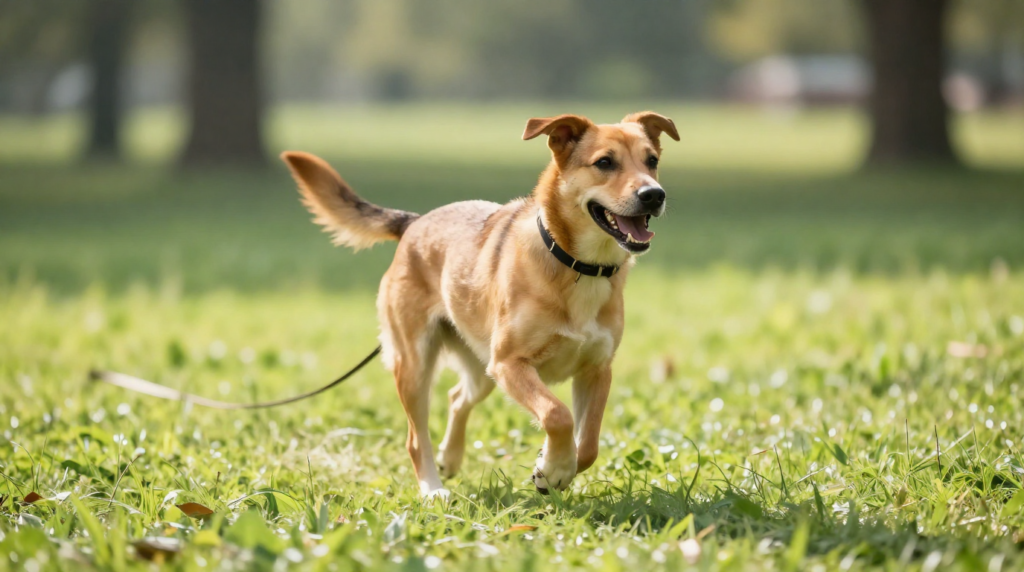
For overweight dogs, low-intensity but long walks are more effective and safer than strenuous exercise. Swimming is especially beneficial for animals with joint problems. For cats, interactive toys, vertical scratching posts, and food puzzles that encourage them to move to get their kibble are excellent tools.
Veterinary monitoring and control
A weight loss plan for pets should always include regular veterinary checkups, ideally every 4-6 weeks initially. The veterinarian will adjust the diet based on progress, rule out underlying medical causes, and prevent potential nutritional deficiencies.
Conclusion
Obesity in pets is a serious but completely reversible problem with the right changes in diet and lifestyle. The first step is to acknowledge it without guilt and act with information. Your veterinarian and a well-designed nutritional plan are the most powerful tools to improve the quality and quantity of your pet’s life.
Frequently asked questions
How long does it take for a dog to lose weight?
With a proper diet and regular exercise, a dog can safely lose 1% to 2% of its weight per week. For a 20 kg dog that is 3 kg overweight, the process can take 3 to 4 months.
Do snacks make dogs gain a lot of weight?
Yes, more than you might think. Treats should make up a maximum of 10% of total daily calories. If you give treats frequently, reduce the daily food ration accordingly.
Can cats go on a diet?
Yes, but with much more caution than with dogs. Cats should not lose more than 1-2% of their weight per week. A sudden calorie restriction can cause hepatic lipidosis in just a few days, especially in cats that were already overweight.
Is light pet food enough to lose weight?
No siempre. El pienso light reduce las calorías pero si se da en exceso el resultado es el mismo. Lo importante es la cantidad total de calorías ingeridas al día, no solo el tipo de alimento.
Posts relacionados
BARF diet for dogs and cats: what it is, benefits and how to get started in 2026
June 7 , 2026
If you've ever wondered if there's anything better than kibble to feed your dog or cat, you've probably come across…
Read moreRecommended automatic feeders
May 26 , 2026
If you have a pet and work outside the home, you know that guilty feeling when it's 2 PM, you've…
Read more