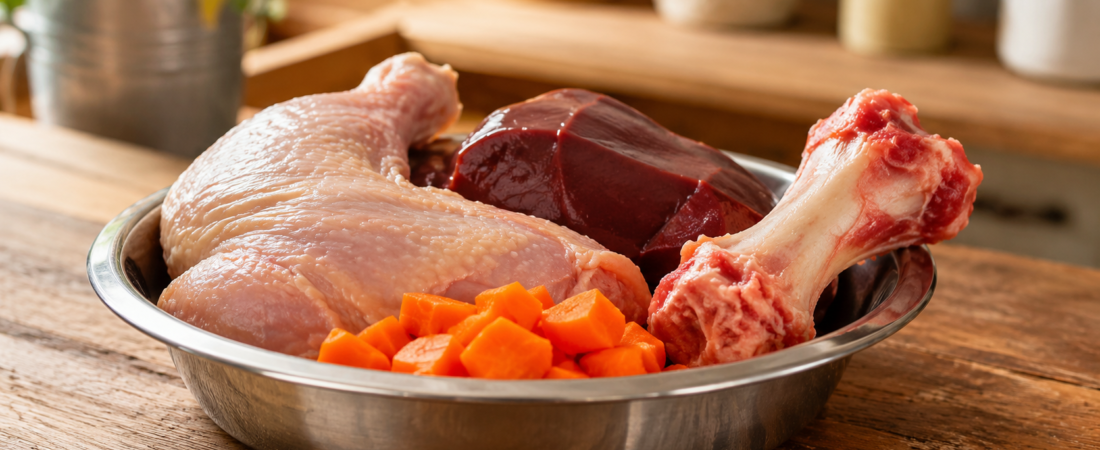
If you’ve ever wondered if there’s anything better than kibble to feed your dog or cat, you’ve probably come across the term BARF. It’s an acronym that stands for Biologically Appropriate Raw Food. And in 2026, it became one of the most discussed and practiced trends in the world of animal nutrition.
The central idea is simple: instead of processed feed, offer the animal a diet based on raw meat, bones, offal, and vegetables, mimicking what it would eat in the wild. But putting it into practice requires knowledge, planning, and, above all, the supervision of a veterinary nutritionist.
What exactly is the BARF diet?
The BARF diet is based on the premise that dogs and cats are carnivores whose digestive system has not evolved to process grains or ultra-processed foods. Its proponents argue that a diet based on raw ingredients improves digestive health, coat condition, energy levels, and the animal’s lifespan.
A standard BARF diet for dogs consists of approximately 70% muscle meat, 10% raw bones, 10% organ meats (half of which should be liver), and the remaining 10% comprised of vegetables, fruits, and supplements. In cats, being obligate carnivores, the proportion of meat is even higher, and vegetables are virtually nonexistent.
Documented benefits of raw food
Digestive improvement
One of the first changes owners report when switching to BARF is a significant reduction in stool volume and odor. A dog’s digestive system assimilates nutrients from raw meat better than those from processed kibble, resulting in less waste. Many dogs also experience a reduction in flatulence and diarrhea.
Healthier coat and skin
The omega-3 fatty acids found in raw fish and grass-fed meat have a direct anti-inflammatory effect on the skin. Many dogs with atopic dermatitis or coat problems improve significantly within a few weeks of a BARF diet, although results vary depending on the individual dog and the cause of the problem.
Dental health
Raw bones act as a natural toothbrush. Chewing on chicken, lamb, or beef bones mechanically removes tartar and keeps gums healthy. Dental veterinarians note that dogs fed a raw food diet (BARF) have significantly fewer problems with tartar and periodontal disease than those fed only kibble.
Risks and precautions you can’t ignore
The BARF diet is not without risks, and it’s important to be aware of them before starting. The main risk is bacterial contamination: raw meat can contain Salmonella, Listeria, or E. coli, which are pathogens capable of affecting both the animal and the people in the household, especially young children, the elderly, or immunocompromised individuals.
The second risk is nutritional imbalance. A poorly formulated BARF diet can lead to deficiencies in calcium, phosphorus, B vitamins, or iodine, with serious consequences for the animal’s bone and metabolic health. Therefore, veterinary supervision is essential, and ideally, the diet should be designed by a veterinarian specializing in nutrition.

Bones also present risks: cooked bones should never be given, as they splinter and can cause intestinal perforation. Only raw bones are safe for chewing.
How to start the BARF diet step by step
- Consult your veterinarian before making any changes to your pet’s diet.
- Start with a single protein for the first 2-3 weeks, usually chicken, to detect intolerances.
- Make the transition gradually: mix the current feed with small amounts of BARF for 7-10 days.
- Use stainless steel containers and thoroughly clean the preparation area after each meal.
- Freeze the meat at least 72 hours before using it to eliminate any possible parasites.
- Record your pet’s weight weekly at the beginning to adjust the portions.
- Consider commercially available frozen BARF kits as a starting point: they are formulated and balanced.
Commercial BARF vs Homemade BARF
For those who want the benefits of raw food without the risks of preparing it at home, the market offers an increasing number of commercial BARF options: frozen preparations with the proportion of meat, bones, and offal already calculated, some with nutritional analysis certification. Brands like Prodog Raw, Nutrican, and Barf Spain offer products that greatly simplify the process.
The main advantage of homemade BARF is complete control over the ingredients and the cost, which can be lower if you source meat directly from suppliers. The disadvantage is the complexity of formulating a balanced diet without errors.
Is the BARF diet suitable for all animals?
No. Growing puppies, pregnant or lactating females, animals with kidney, liver, or pancreatic disease, and immunocompromised animals require special considerations. In some cases, the BARF diet is directly contraindicated. Only your veterinarian can assess whether it is appropriate for your specific pet.
Conclusion
The BARF diet can be an excellent option for many pets, especially those with digestive issues, skin problems, or food sensitivities that don’t respond well to conventional kibble. But it’s not a one-size-fits-all solution or a fad that can be adopted without preparation. With information, planning, and veterinary supervision, it can transform your pet’s health in a positive and lasting way.
Frequently asked questions
How much does it cost to feed a dog a BARF diet?
It depends on the size of the dog and the suppliers. For a medium-sized dog weighing 15 kg, the monthly cost is usually between 60 and 120 euros with fresh ingredients, and slightly more with frozen commercial kits.
Can I combine BARF with kibble?
Technically, yes, but it’s not the best idea. Raw meat and kibble have different digestion times, which can cause digestive discomfort. If you want to combine them, it’s best to feed them at separate times.
Is the BARF diet safe for cats?
Yes, with the right formulation. Cats are obligate carnivores and respond very well to a raw diet. However, they need taurine in specific amounts, an amino acid that must be present in their diet or supplemented to prevent heart and vision problems.
Where can I buy the ingredients for BARF?
Butchers, municipal markets, and specialized online suppliers. Many pet stores already offer frozen raw meat specifically for BARF in the indicated proportions.
Posts relacionados
Recommended automatic feeders

May 26 , 2026
If you have a pet and work outside the home, you know that guilty feeling when it's 2 PM, you've…
Read moreHydration in pets: why your dog or cat isn’t drinking enough water and how to fix it

June 7 , 2026
Water is the most important nutrient for any living being, and pets are no exception. However, chronic dehydration is one…
Read more