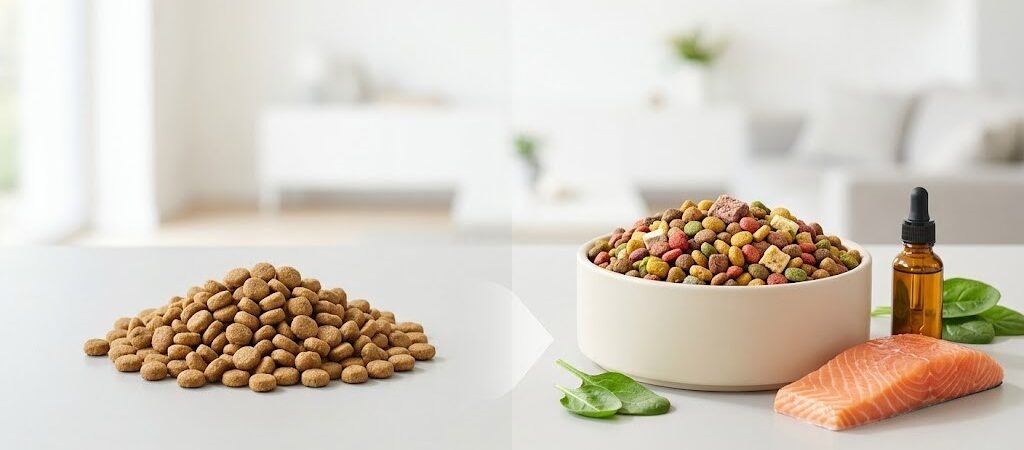
From basic feed to therapeutic nutrition: how functional foods are transforming the health of dogs and cats with ingredients that go beyond caloric intake.
For decades, the guiding question for choosing pet food was simple: Does it contain the basic nutrients my pet needs? By 2026, that question has evolved significantly. More informed pet owners are no longer just looking for food that meets the bare minimum requirements. They’re looking for food that actively contributes to digestive health, strengthens joints, boosts the immune system, or supports their pet’s cognitive function.
This trend has a specific name in the industry: functional foods. And it’s moving from a niche category to becoming one of the fastest-growing segments of the animal feed market by 2026.
What exactly are functional pet foods?
Contemporary veterinary nutrition has moved beyond the idea of food as a passive element. Today, it is recognized that diet can be a strategic tool to support specific physiological functions, prevent disorders, and complement specific clinical plans. A functional food is, by definition, one that, in addition to its basic nutritional value, provides a demonstrable additional health benefit.
In the context of animal nutrition, functional foods are based on active ingredients with documented physiological effects. This isn’t marketing; it’s nutrition grounded in scientific evidence, with studies supporting the efficacy of each ingredient in specific animal populations.
The most relevant functional ingredients in 2026
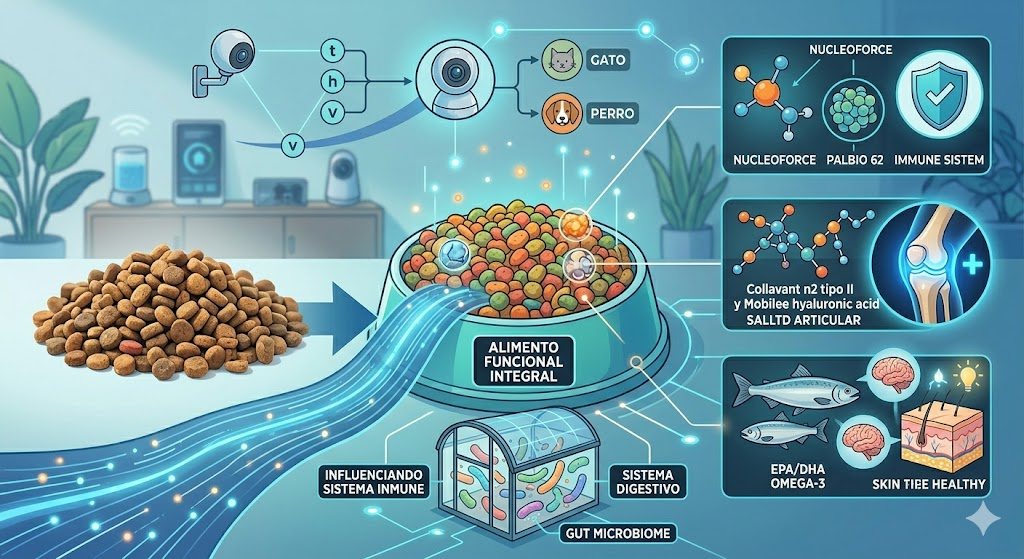
Digestive health is the area where functional foods have the strongest market presence. Probiotics, prebiotics, and fermentable fibers such as inulin and fructooligosaccharides support a balanced gut microbiota, improve digestibility, and reduce problems like recurrent diarrhea and flatulence. Companies like Bioiberica develop specific functional ingredients such as Nucleoforce and Palbio 62, designed to support the immune and digestive systems of dogs and cats.
Joint health is the second area of greatest interest, especially in large breeds and middle-aged and older animals. Ingredients such as native type II collagen (Collavant n2), hyaluronic acid (Mobilee), and glucosamine are incorporated into feeds and treats to support joint function and reduce inflammation. Scientific evidence on the efficacy of these ingredients in animals is robust and growing every year.
Omega-3 fatty acids, especially marine-derived EPA and DHA, have multiple documented functions in dogs and cats: they improve skin and coat health, have an anti-inflammatory effect, and support cognitive function in older animals. Their inclusion in premium pet foods has become widespread, but the difference lies in the source and bioavailability of the ingredient.
The role of gut health as a gateway
The connection between gut health and overall well-being is one of the most significant discoveries in veterinary nutrition in recent years. A balanced gut microbiota not only improves digestion but also influences the immune system, the animal’s mood, and its ability to absorb nutrients from food. This is why digestive health is the primary benefit that pet owners seek in functional foods, according to the latest market data.
Thirty-four percent of dog and cat owners cite digestive health as their top nutritional concern, according to data from ingredients company Kerry. This demand is driving a wave of new products that combine highly digestible protein sources with prebiotic and symbiotic ingredients that work synergistically.
Formats and presentations: beyond feed
Functional pet foods aren’t limited to dry kibble. Functional treats are one of the fastest-growing formats: treats that, in addition to being a reward, incorporate specific active ingredients for joints, teeth, or the immune system. The advantage of functional treats is that they are easy to dose, the animal readily accepts them, and the owner can see a concrete result in a specific aspect of their pet’s health.
Liquid supplements, wet foods with active ingredients, and veterinarian-prescribed diets for specific conditions complete the picture of a market that has moved from basic nutrition to precision nutrition.
Why it matters
The trend toward functional foods reflects a profound shift in how pet owners understand their responsibility. Pets are no longer simply animals to be fed; they are family members whose long-term health depends, to a large extent, on the nutritional choices made every day. Functional foods are the industry’s response to this demand for greater sophistication and responsibility.
For pet owners, the key is understanding that not all functional ingredients are created equal: the quality of the source, bioavailability, and effective dosage are crucial. It’s always advisable to consult with a veterinarian before introducing functional foods for specific therapeutic purposes.
Posts relacionados
Pet obesity: how to detect, prevent and treat it with diet

June 7 , 2026
More than 50% of domestic dogs and cats in Europe are overweight or obese. It is the most common health…
Read moreRecommended automatic feeders

May 26 , 2026
If you have a pet and work outside the home, you know that guilty feeling when it's 2 PM, you've…
Read more