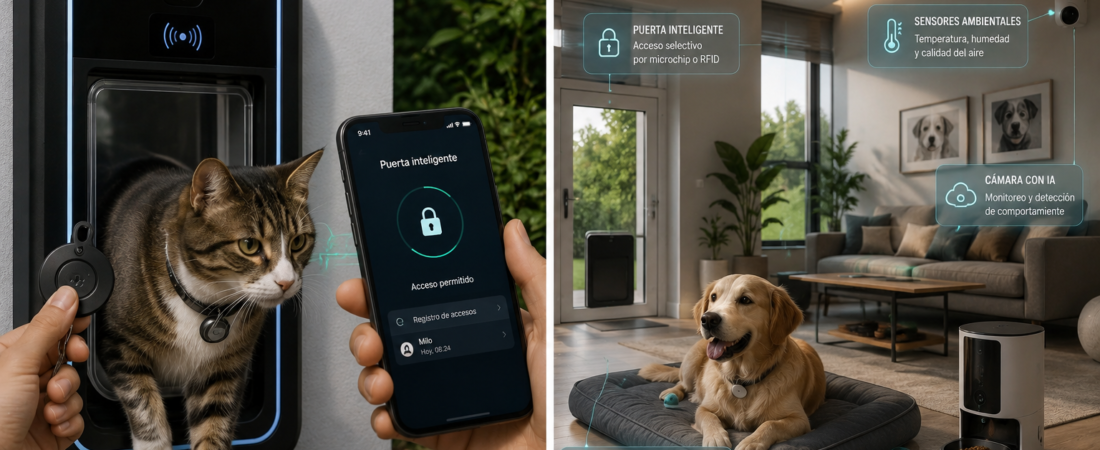
Connected homes no longer ignore pets: doors that recognize the microchip, sensors that distinguish people from animals, and routines that adapt the home to the rhythm of life of each species.
For years, home automation designed the smart home with its human inhabitants in mind. Motion sensors activated lights whenever anything moved, resulting in nighttime light shows starring the cat. Automated blinds lowered without considering that the dog needed natural light to avoid developing anxiety. Smart locks, brilliant for people, completely ignored the access of animals.
By 2026, that gap is closing rapidly. The concept of a pet-friendly home is no longer just a real estate label: it’s a specific technological category, with dedicated devices, smart integrations, and a market that’s growing at a double-digit rate every year. Connected homes are learning to coexist with animals, and the result is a more comfortable home for everyone.
Smart doors: selective access via microchip or RFID
The pet door has existed for decades in its most basic form: a cat flap at the bottom of the kitchen or garden door. The smart version of 2026 is radically different. Models like the SureFlap Microchip Pet Door Connect read the animal’s official microchip to decide whether to allow it access. Only your cat or dog can enter. Neighborhood animals, rodents, or any other unwanted visitors are kept out.
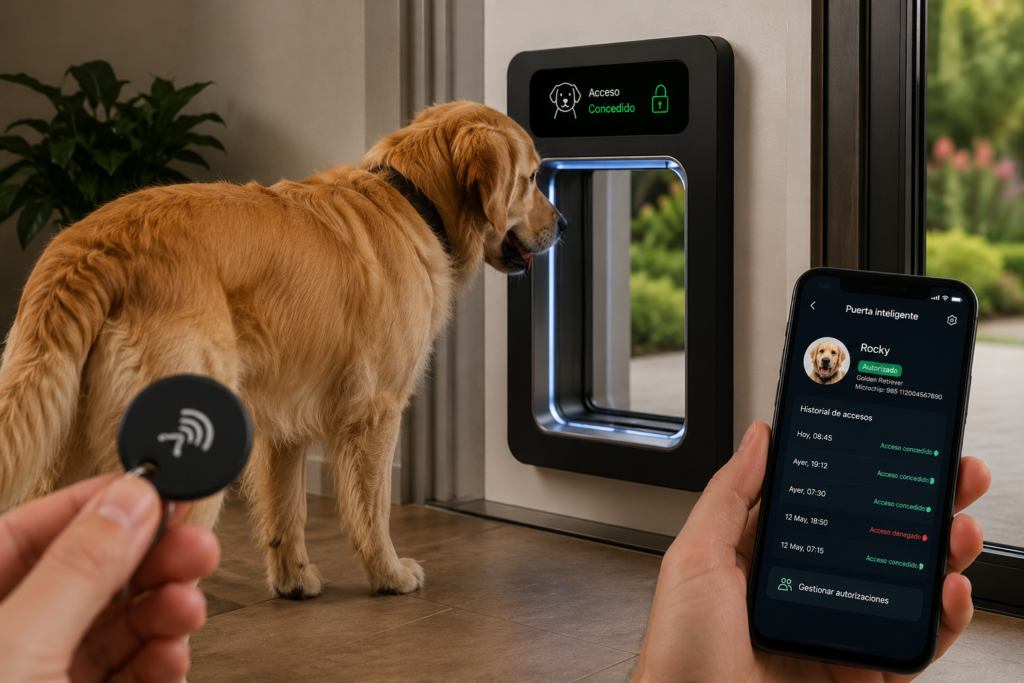
The control goes even further: from the mobile app, you can schedule access times (open during the day, locked at night), view a history of each time the pet has entered or left, and remotely lock or unlock at any time. For homes with multiple pets, the PetSafe SmartDoor allows you to program up to five pets with different access permissions for each one.
Integration with home automation ecosystems is the next level. Models compatible with Alexa or Google Home allow you to create automations such as: ‘when the dog goes out into the garden, turn on the outdoor light’ or ‘if the door has been open for more than ten minutes after 11:00 PM, send me a notification’.
Sensors that distinguish pets from people
The biggest problem with motion sensors in homes with pets has always been the same: they can’t distinguish between an intruder at 3 a.m. and the cat going for water. This made motion-based alarm systems useless for many pet owners.
The latest generation of sensors has solved this problem with two distinct approaches. The first is weight calibration: sensors that ignore objects below a certain weight (adjustable according to the animal’s size). The second, more sophisticated, is height detection: sensors with an upward-facing field of view that only detect movement above a certain height, ignoring animals moving close to the ground.
The Aqara FP2 goes even further: it uses presence radar technology (instead of infrared) that not only detects movement but can also differentiate between several individuals in the same room and recognize specific behavioral patterns. For pets, this opens up the possibility of receiving alerts if the animal hasn’t moved for too long, a sign that could indicate a health problem.
Climate control adapted to the animal’s needs
Smart thermostats designed for homes with pets add a layer of consideration that standard models ignore. If the owner leaves home in the summer and the thermostat lowers the temperature to save energy, the dog or cat is left in an environment that can be dangerous when outside temperatures are extreme.
The most advanced thermostats of 2026, such as the Tado V3+ or the Ecobee SmartThermostat, allow you to set a minimum or maximum safe temperature for when no one is home. Some even include additional sensors that monitor the temperature in different rooms, ensuring that the space where your pet spends most of its time is always within a safe range.
Lighting and blinds: pets’ circadian rhythm matters too
Dogs and cats have their own circadian rhythms that are significantly influenced by light. A pet that spends many hours in an apartment with little natural light can develop sleep disturbances, mood swings, and in some cases, depression. Smart motorized blinds, integrated with the solar schedule and controlled by an app, ensure that the animal receives natural light during the appropriate hours, even if no one is home to open them manually.
Why it matters
The pet-friendly smart home isn’t a technological whim. It’s a response to a very real need: in Spain, over 40% of households have at least one pet, and most of their owners work outside the home for several hours a day. Designing the home to ensure the animal is safe, comfortable, and stimulated during those hours of absence is a responsibility that technology can help fulfill practically and affordably.
Smart homes that integrate pet considerations into their design aren’t the future: they’re the present. And pet owners who explore these technologies quickly discover that the benefits extend beyond their pets to their own peace of mind.
Posts relacionados
Smart automatic litter boxes: a complete guide and the best models for 2026
June 8 , 2026
If you have one or more cats, cleaning the litter box is probably the least enjoyable household chore for any…
Read moreHow to save energy with home automation
May 26 , 2026
The electricity bill remains one of the biggest fixed household expenses. And while it's impossible to eliminate it, home automation…
Read more