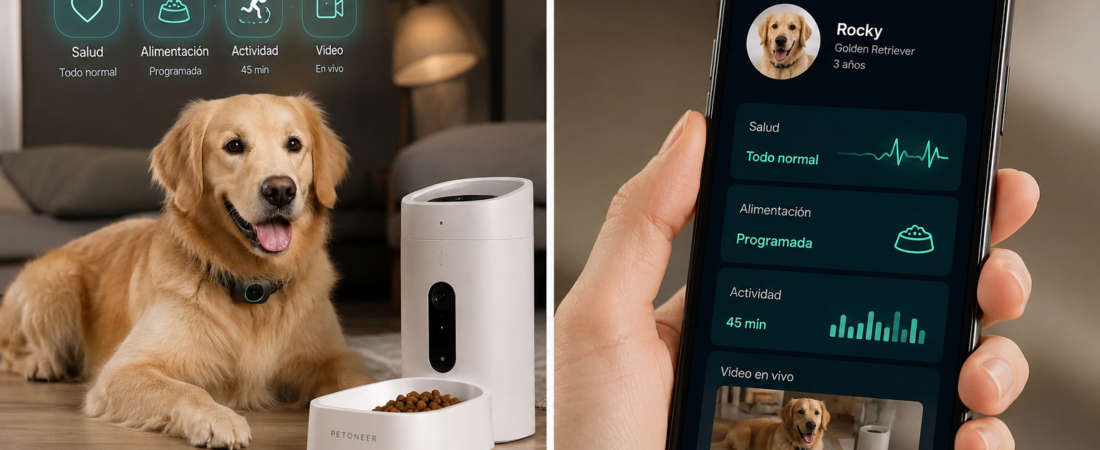
From automation to prevention: how artificial intelligence is turning every household routine into a health signal for your pet.
For years, pet gadgets functioned in silos: a feeder with its app, a camera with its own, a water bowl with yet another. The result was a fragmented experience that few owners fully utilized. In 2026, that has changed. The concept of an AI ecosystem for pets has arrived on the market with a clear proposition: that all devices in the home communicate with each other, share data, and continuously build a complete health profile for each animal.
The clearest sign of this change came in January 2026 from Las Vegas. At CES, one of the world’s most influential technology showcases, the PETKIT brand unveiled its new line under the slogan ‘AI Ecosystem for Everyday Pet Care’. It wasn’t just marketing: it was proof that the pet tech market has taken a qualitative leap from which there is no turning back.
From standalone gadgets to integrated platforms
The paradigm shift the sector will experience in 2026 is moving from selling devices to building platforms. PETKIT exemplifies this with three devices that share the same application and intelligence: EVERSWEET ULTRA, a water fountain with a facial recognition camera for each pet; YUMSHARE DAILY FEAST, a robotic wet food dispenser; and PUROBOT CRYSTAL DUO, an automatic litter box with a built-in AI camera.
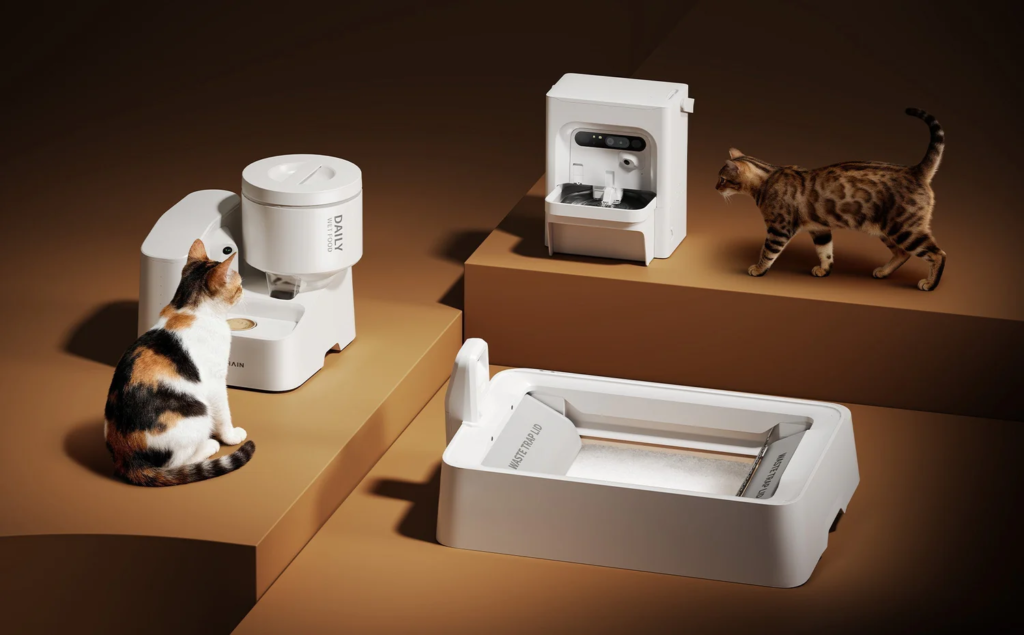
What makes this ecosystem special isn’t each device individually, but the layer of data that connects them. The PETKIT app builds a daily health profile for each animal by recording how much it drinks, how much it eats, how often it uses the litter box, and what anomalies the cameras detect. If the cat drinks less than usual for three days, the app flags it as an early warning sign of a possible kidney problem. If its litter box behavior changes, it can indicate a urinary tract infection before the animal shows visible symptoms.
This approach, which in human medicine we call continuous health wearables, is being directly applied to animal care. The difference is that pets can’t tell you they’re feeling unwell. Technology does it for them.
AI that distinguishes between animals in homes with multiple pets
One of the most complex technical challenges in pet ecosystems is managing multiple pets in households. How do you know which cat has drunk from your water bowl if you have three? The answer lies in biometric recognition. PETKIT’s EVERSWEET ULTRA fountain incorporates facial recognition for each pet, identifying and recording its data separately. The same applies to smart feeders that read the pet’s microchip before the lid is opened.
This is not a minor detail: in multi-pet households, knowing exactly which animal is eating how much and when can make the difference between detecting a health problem in time or letting it go unnoticed for weeks.
The market responds: data and trends
Institutional interest supports this evolution. According to market data published in 2026, the global smart pet product market exceeds $6.7 billion this year, with health monitoring devices as the fastest-growing segment. Fortune Business Insights projects that the AI-powered animal health market will surpass $35 billion by 2030. More than 61% of pet owners in developed markets already prioritize devices capable of detecting changes in their pet’s behavior.
Platforms like SiiPet and AgenticPet.ai go even further: they propose ecosystems of autonomous agents that learn continuously, adapt care plans, and can connect with veterinarians to share relevant clinical data. The future of preventative veterinary medicine lies in the smart home.
Why it matters
For the modern pet owner, this shift has a very concrete impact: moving from reacting only when the animal is already sick to receiving early warning signs that allow action before the problem becomes serious. A cat that develops chronic kidney disease has far more treatment options if it is detected in the early stages than when the symptoms are obvious. A dog with undiagnosed hypothyroidism can go months with fatigue and weight gain without the owner associating it with an illness.
Technology doesn’t replace veterinarians. But it can be the bridge that gets the animal to the vet before the problem becomes urgent. That’s where the real value of AI ecosystems for pets in 2026 lies.
Posts relacionados
Apps for pet owners: the best apps of 2026 to care for your pet

June 8 , 2026
The smartphone has become the most comprehensive management tool a modern pet owner can have. Beyond simply taking photos of…
Read moreUseful technology for pet owners
May 26 , 2026
The pet technology market has exploded in recent years. By 2026, there will be gadgets for virtually every aspect of…
Read more