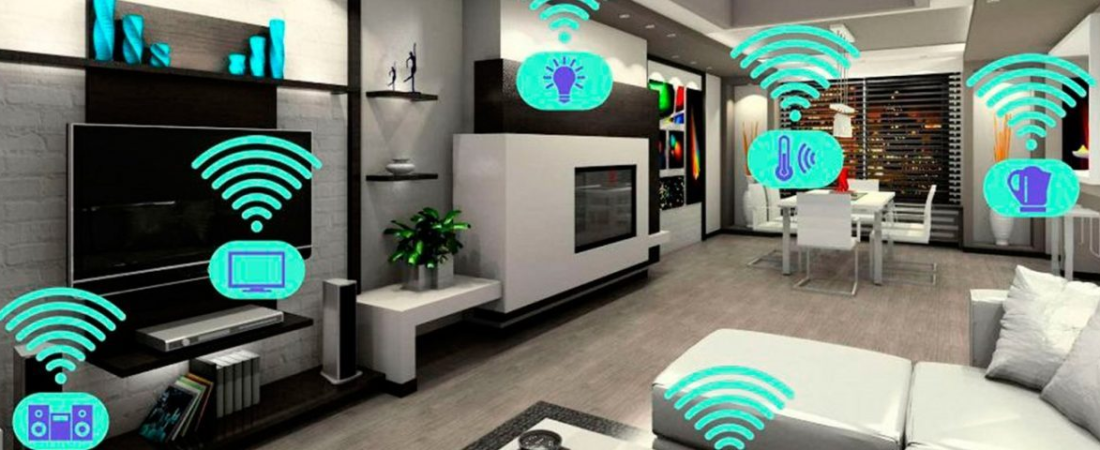
The electricity bill remains one of the biggest fixed household expenses. And while it’s impossible to eliminate it, home automation offers very specific tools to reduce it significantly: smart thermostats that avoid heating empty rooms, plugs that cut off standby power, lighting systems that turn off automatically, and automated routines that adapt consumption to the price of electricity at any given time of day.
In this guide we explain exactly how to save energy with home automation, which devices to use and how much you can realistically expect to save.
The huge amount of energy you’re wasting at home without even knowing it
Before discussing home automation, it’s helpful to understand where energy actually goes in a typical home. Heating and air conditioning account for between 40% and 60% of a home’s total energy consumption. This is followed by water heaters (15-20%), appliances (15%), and lighting (10-15%).
Within these energy consumption figures, there’s an invisible component that many underestimate: standby power. A television in standby mode consumes between 1 and 3 watts continuously. A charger plugged in without a device consumes 0.5-1 watt. A router, between 5 and 10 watts. Individually, these seem minimal, but the sum of all the standby devices in a home can amount to between 50 and 100 euros per year.
Smart thermostat: the most profitable investment
The smart thermostat is, by far, the smart home device with the best return on investment for energy savings. It works by learning your routines in just a few days and optimizing heating or air conditioning so that it only operates when truly needed.
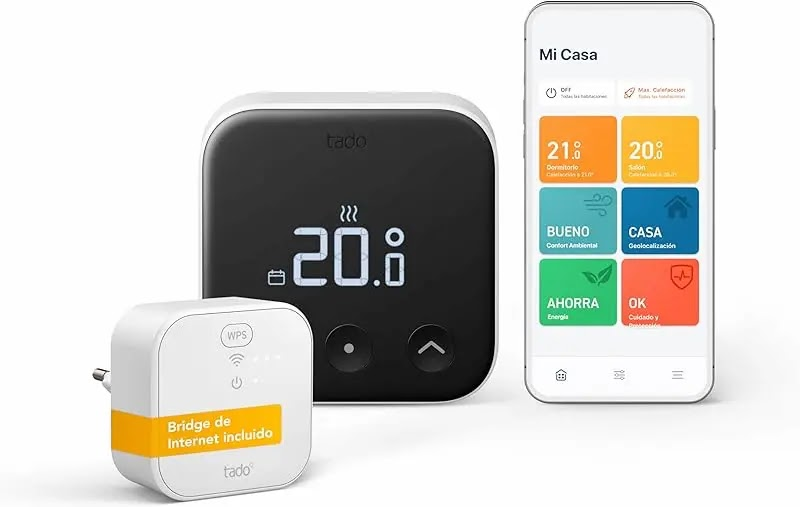
The Google Nest Thermostat and the Tado V3+ are the two most popular models in Europe. Users who install a smart thermostat report savings of between 15% and 31% on their heating and cooling bills. With an installation cost of €80-€200, the payback period is typically one to two years.
The key features that make this saving possible are: geolocation (the thermostat detects when you leave home and automatically reduces the temperature), routine learning (it adjusts schedules without you having to program them manually) and integration with time (it lowers the heating when there is sun because it knows that the temperature will rise on its own).
Smart plugs: eliminate standby power consumption
A smart plug with an energy meter, like the TP-Link Tapo P110 (15-18 euros), lets you see exactly how much energy each device consumes in real time. Once you’ve identified the biggest standby consumers, you can program the plug to automatically cut off the power supply at a specific time or when consumption falls below a certain threshold.
A very effective strategy is to install a smart plug on the power strip for your TV, game console, and other audiovisual equipment. Programming it to turn off at 11:00 PM or when it detects no active power consumption can save you between €30 and €60 per year on that power strip alone.
Smart lighting: Don’t pay for light that no one uses
Smart lighting reduces energy consumption in two ways: by using high-efficiency LED technology (Philips Hue bulbs consume between 8 and 10 W compared to 60 W for an incandescent bulb) and, above all, by automating switching on and off.
Motion sensors are the perfect solution: a bathroom light that turns on when you enter and turns off after 5 minutes if it doesn’t detect movement can lead to significant savings in homes with multiple occupants. Hallway, stairwell, or garage lights are also ideal candidates for this type of automation.
Add to this the ability to simulate presence when you’re on vacation (the lights turn on and off randomly) and you’ll also have an improvement in home security.
Motorized blinds and curtains: harness solar energy
Smart blinds are a lesser-known investment, but one with a real energy impact. In summer, keeping the blinds down during the hottest hours significantly reduces the need for air conditioning. In winter, opening them during sunny hours allows you to take advantage of passive solar heat.
Systems like those from Somfy or IKEA’s Tradfri motorized blinds allow these actions to be automated: lowering the blinds automatically when the indoor temperature exceeds 25 degrees or when the sensor detects direct solar radiation.
Time-of-use pricing: home automation makes it automatic
In Spain and many other European countries, time-of-use electricity tariffs offer different prices depending on the time of day: very cheap at night (off-peak) and more expensive during the day (peak). With home automation, you can automate high-consumption appliances to operate during off-peak hours.
The dishwasher, washing machine, electric car charger, or water heater can be programmed using smart plugs or directly from the manufacturer’s app to start at 11:00 PM (off-peak hours) instead of 8:00 PM. Savings can range from 30% to 50% during these consumption cycles.
Summary of potential savings per device
- Smart thermostat: saves 15-31% on heating and cooling (€100-€300 per year in typical homes)
- Smart plugs in standby mode: saves €50-100 per year
- Lighting with motion sensors: savings of 20-40% on lighting (€20-60 per year)
- Automated blinds: 10-20% reduction in air conditioning
- Off-peak programming: saves 30-50% on high-consumption appliances
Where to start if you have a limited budget?
If you can only invest in one device, choose a smart thermostat. It’s the most economical and pays for itself the fastest. If you already have a thermostat or central heating without individual controls, the next step is smart plugs with energy meters to identify and cut down on the biggest energy waste.
From there, smart lighting with motion sensors in areas of intermittent use (bathrooms, hallways, garage) is a very profitable long-term investment.
Conclusion
Home automation isn’t just about convenience and technology: it’s also a highly practical tool for significantly reducing household energy costs. A fully automated home with a smart thermostat, energy-efficient plugs, and sensor-activated lighting can save between €300 and €600 annually in a typical house. It’s an investment that pays for itself in just one or two years.
Frequently asked questions
How much can I actually save with a smart thermostat?
Independent studies indicate savings of between 15% and 31% on heating bills. For a home with an annual heating bill of €800, this translates to savings of between €120 and €250 per year.
Is it complicated to install a smart thermostat?
In most cases, no. Models like the Tado V3+ can be installed in under 30 minutes without an electrician. Simply replace your existing thermostat with the new one and follow the instructions in the app.
Can smart plugs be used with high-power appliances?
Standard sockets support up to 2,300 W (10 A). For washing machines, ovens, or dryers, you need specific sockets with higher wattage. Always check the maximum wattage of the socket before connecting high-consumption appliances.
Is investing in home automation for energy savings worthwhile in a rental apartment?
Yes, with some caveats. Devices like smart plugs and light bulbs can be taken with you when you move. Thermostats are more problematic if you can’t modify the existing installation. Check with the landlord before installing any permanent system.
Posts relacionados
Smart pet cameras

May 26 , 2026
Leaving your pet home alone is much easier when you can see them in real time from your phone. Smart…
Read moreSmart automatic litter boxes: a complete guide and the best models for 2026
June 8 , 2026
If you have one or more cats, cleaning the litter box is probably the least enjoyable household chore for any…
Read more