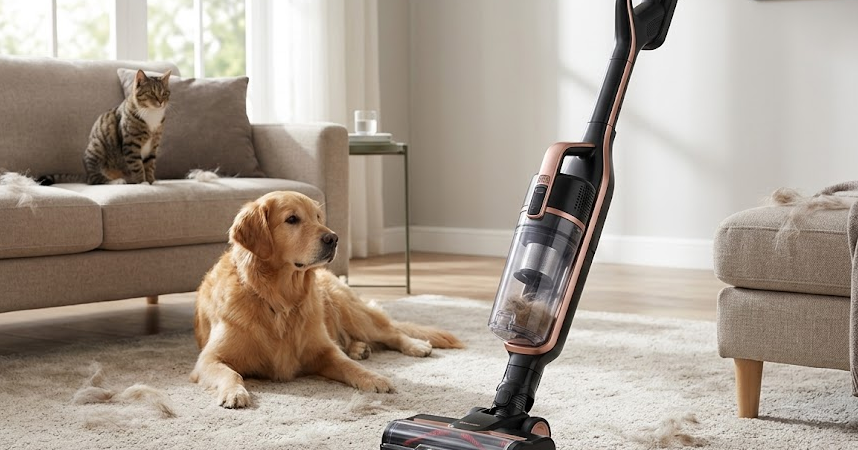
If you have a dog or cat, you already know what it’s like to find fur on the sofa, carpet, clothes, and even in your food. Robot vacuums have evolved enormously in recent years, and by 2026 there are models specifically designed to deal with pet hair: with anti-tangle brushes, HEPA filters that trap allergens, sensors that prevent the robot from getting stuck, and self-emptying systems that require no intervention for weeks.
In this guide we present the best robot vacuum cleaners for homes with pets, with their strengths, limitations and current prices.
Why pet hair poses a special challenge for robot vacuum cleaners
Pet hair has three characteristics that make it difficult to vacuum with conventional robots: it is long and thin (it gets tangled in the brushes), it is loaded with allergens and dander (which escape through the basic filtration system), and it tends to accumulate in corners and under furniture where robots have difficulty reaching.
Robots designed for pets address these three problems with tangle-free rubber brushes, HEPA filters that trap 99.97% of particles, and a design with enhanced side suction for corners. They’re not perfect, but they represent a huge difference compared to generic models.
What to look for when choosing a robot vacuum cleaner for pets
Brush type: rubber vs bristle
Rubber brushes are best for pet hair. Unlike bristle brushes, they don’t get tangled in long hair. Brands like iRobot (Roomba) and Roborock offer their best models with rubber or mixed brushes that minimize tangling.
Suction power
For pet hair on carpets, you need at least 2,500 Pa of suction. Premium models reach 10,000-12,000 Pa, allowing you to lift hair embedded in carpets and long-pile rugs.
HEPA filter
Essential if any family member has allergies to dust mites, pet dander, or pet hair. HEPA filters trap particles as small as 0.3 microns, including the most common pet allergens.
Intelligent mapping and navigation
Models with laser mapping (LiDAR) are much more efficient: they map the home on the first use and follow systematic routes that guarantee coverage of every inch. Models without mapping follow random patterns and are less effective in large homes.
Self-emptying of the base
A highly valued feature for homes with pets: the charging base automatically empties the robot’s dustbin at the end of each cycle, storing the pet hair in a large-capacity bag that only needs emptying every 30-60 days. Ideal for avoiding having to manually empty the robot every day.
The best robot vacuum cleaners for pet hair in 2026
iRobot Roomba Combo j9+ — The most complete
The Roomba Combo j9+ combines vacuuming and mopping in a single device, with automatic emptying and refilling of the water tank. Its tangle-free rubber brushes are among the best on the market for pet hair. The room mapping function allows you to schedule specific cleanings (kitchen only, living room only) and avoid areas where the food bowl or litter box is located. Suction power: 10 times stronger than basic models. Price: €700-€900.
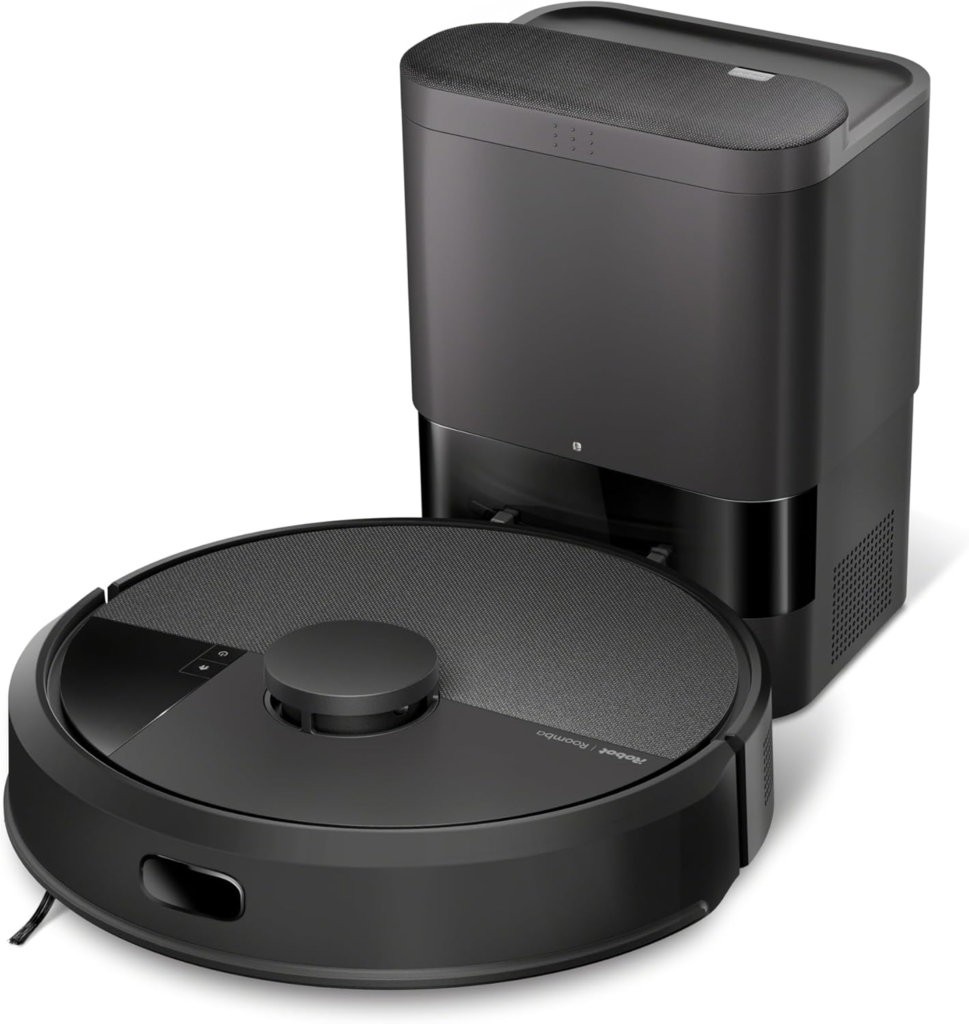
Roborock S8 MaxV Ultra — The best premium value for money
The Roborock S8 MaxV Ultra is arguably the most complete robot vacuum cleaner on the market in 2026. It offers 10,000 Pa of suction power, anti-tangle brushes, precise LiDAR mapping, a self-emptying station, self-scrubbing with a dual rotating brush, and even a front-facing AI camera to identify obstacles like toys or pet waste. Price: €800-€1,100.
Ecovacs Deebot T30S Pro Omni — The best for allergy sufferers
The Deebot T30S Pro Omni stands out for its five-stage filtration system with a high-performance HEPA filter, specifically designed for pet allergens. Its base station automatically cleans and dries the mopping brushes, eliminating unpleasant odors. It boasts 11,000 Pa of suction power. Price: €700-900.
Shark Matrix Plus — The carpet option
If your home is mostly carpeted, the Shark Matrix Plus is an excellent choice. Its Matrix Clean technology ensures that every inch of carpet is vacuumed at least twice per cycle, and its PowerFins brush won’t get clogged with pet hair. Price: €400-€600.
Eufy RoboVac X10 Pro Omni — The affordable, quality alternative
For those seeking premium features at a more affordable price, the Eufy X10 Pro Omni offers 8,000 Pa of suction, LiDAR mapping, self-emptying, and mopping for under €500. It doesn’t have all the extras of Roborock or iRobot, but it’s more than adequate for a household with one or two pets.
Useful accessories for robot vacuum cleaners in homes with pets
- Anti-tangle replacement brushes: change them every 6-12 months according to the manufacturer.
- Additional HEPA filters: always keep them in stock for weekly cleaning.
- Sandpit mats: placing a textured mat under the sandpit reduces sand transport.
- Virtual wall or magnetic exclusion strip: delimit them to prevent the robot from entering the pet’s play area.
Tips for getting the most out of your performance
For the robot to work well with pets, there are a few basic routines that make all the difference. The first is to pick up toys from the floor before scheduling a cleaning: the robot will detect them as obstacles or scatter them around the enclosure. The second is to clean the robot’s brushes at least twice a week, even if they are tangle-free: pet hair accumulates very quickly.
The third is to empty the dustbin manually or check that the self-emptying base isn’t full: if the robot can’t deposit what it has vacuumed, it will stop working properly. And the fourth is to schedule cleaning when the pet is out or in another room, since many animals get scared or chase the robot, interrupting the cycle.
Conclusion
A good robot vacuum cleaner is probably the gadget that most improves the quality of life in a home with pets. The dirt generated by hair, dander, and litter box litter multiplies when there are animals in the house, and keeping it under control manually is exhausting. Models with rubber brushes, HEPA filters, and automatic self-emptying make the home presentable with almost no intervention. The Roborock S8 MaxV Ultra and the iRobot Roomba J9+ are our top recommendations, with the Eufy X10 Pro Omni as a solid budget-friendly alternative.
Frequently asked questions
Can a robot vacuum cleaner pick up sand from the sandbox?
Yes, but with limitations. Grains of sand can damage the robot’s internal mechanisms over time. Ideally, a mat should be placed under the sandbox to trap the sand before the robot collects it.
How many times a day should I program the pet robot?
With a short-haired pet, once a day is usually enough. With long-haired dogs or cats, or during shedding season, scheduling two daily cycles (morning and afternoon) keeps the home much cleaner.
Do robot vacuum cleaners scare pets?
Some animals get used to it quickly, while others never do. It’s best to introduce the robot gradually: leave it on without moving it for the first few days so your pet can become familiar with the sound before scheduling autonomous cleanings.
Is it worth spending more than 500 euros on a robot vacuum cleaner?
For homes with pets, yes. Premium models offer features like automatic self-emptying, high-performance HEPA filters, and tangle-free brushes that make a real difference in everyday life. They’re an investment you’ll notice from the very first use.
Posts relacionados
Useful technology for pet owners
May 26 , 2026
The pet technology market has exploded in recent years. By 2026, there will be gadgets for virtually every aspect of…
Read moreAI agents for pets: the next revolution in autonomous animal care
May 26 , 2026
Beyond voice assistants: how autonomous AI agents are redefining what it means to care for a pet in the digital…
Read more