Losing a dog is one of the most distressing experiences a pet owner can go through. A moment of inattention, a loose leash, a fence with a hole… and panic sets in. A GPS tracker for dogs won’t prevent your pet from running away, but it will ensure you always know exactly where they are and can locate them in minutes. By 2026, these devices are small, lightweight, affordable, and in many cases, they also monitor the animal’s health and physical activity.
In this comprehensive guide, we explain how GPS trackers for dogs work, what you should consider before buying one, which are the best models on the market, and how to get the most out of them.
How does a GPS for dogs work?
A GPS tracker for dogs is a small device that attaches to the animal’s collar and transmits its location in real time via the mobile network (4G or LTE) to your smartphone. The technology is exactly the same as the GPS in your car: the device calculates its position using satellites and sends it to a mobile app every few seconds.
For the tracker to work, it needs mobile network coverage. This means it works perfectly in cities, towns, and most rural areas, but may lose signal in very remote areas without 4G coverage. Most trackers include or require a data SIM card, which in many cases is included in the monthly service subscription.
GPS vs Bluetooth: Don’t confuse the two systems
There’s a fundamental difference between GPS trackers and Bluetooth trackers like Apple’s AirTag or Tile. Bluetooth trackers have a very limited range (10-30 meters) and only alert you when another device with the app detects the animal. They’re useful for finding lost items at home, but completely useless if your dog runs into the street.
A real GPS tracker with a data SIM card shows you your dog’s exact location in real time on a map, whether it’s 100 meters or 50 kilometers away. For pets that go outside, only a real GPS tracker makes sense.
What to look for before buying a GPS for dogs
Accuracy and update frequency
Standard GPS accuracy is around 5-10 meters, enough to locate your dog in a park or on a street. More important than pinpoint accuracy is the update frequency: the best models update the position every 2-3 seconds in active tracking mode.
Battery life
This is one of the most critical points. GPS trackers consume a lot of battery power because they transmit data continuously. The models with the best battery life offer 5-7 days in normal mode and 1-3 days in active tracking mode. Some, like the Fi Series 3, extend battery life up to 3 months in power-saving mode, although with less frequent updates.
SIM coverage and cost
Most trackers include a built-in SIM card and charge a monthly subscription of between €3 and €10 for data service. Check coverage in your country and in the areas where you usually walk your dog before buying. Tractive, for example, has coverage in more than 175 countries.
Weight and size
For small or medium breeds, the weight of the tracker matters. A device weighing more than 40 grams can be uncomfortable for a dog under 10 kg. The lightest models on the market weigh around 20-25 grams, similar to a euro coin.
Impermeability
Your dog is going to get wet. Make sure the tracker has at least an IP67 (submersible up to 1 meter) or IP68 rating. Some models, like the Tractive GPS 4, are fully submersible.
The best GPS devices for dogs in 2026
Tractive GPS Dog 4 — The most recommended
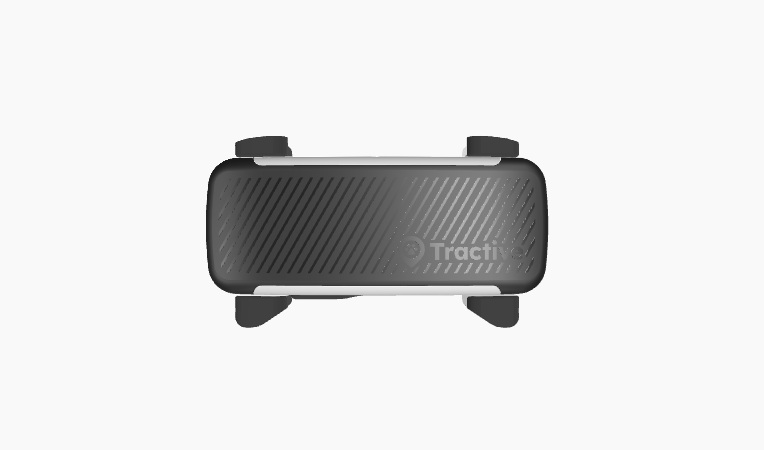
The Tractive GPS Dog 4 is Europe’s best-selling tracker, and for good reason. It offers real-time tracking every 2-3 seconds, coverage in over 175 countries, a 5-7 day battery life, IP68 certification, and an integrated activity monitor. Weighing only 35 grams, it costs around €50 plus a subscription starting at €4.99 per month. Its app is one of the most comprehensive and intuitive on the market, featuring route history, safe zones with alerts, and sleep analysis.
Weenect Dogs 2 — Best for rural areas
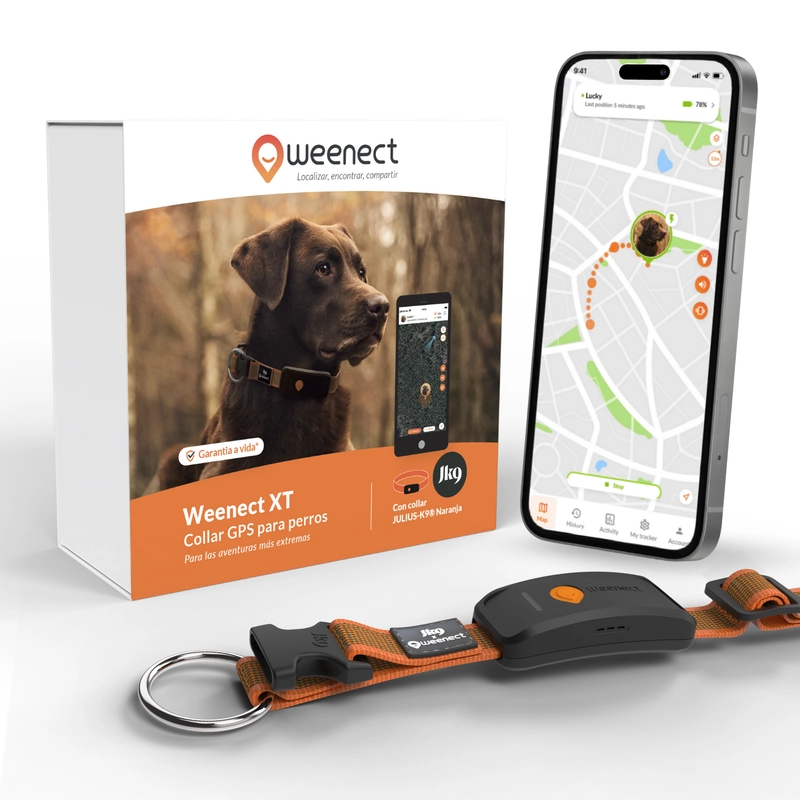
Weenect is a French brand with a very good reputation in Europe. Their Dogs 2 model offers tracking every 10 seconds, a 3-4 day battery life, excellent European coverage, and a unique feature: it can remotely vibrate or ring the collar to call your dog. Price: €40-50 plus a subscription starting at €3.99 per month.
Fi Series 3 — The best for the United States and activity
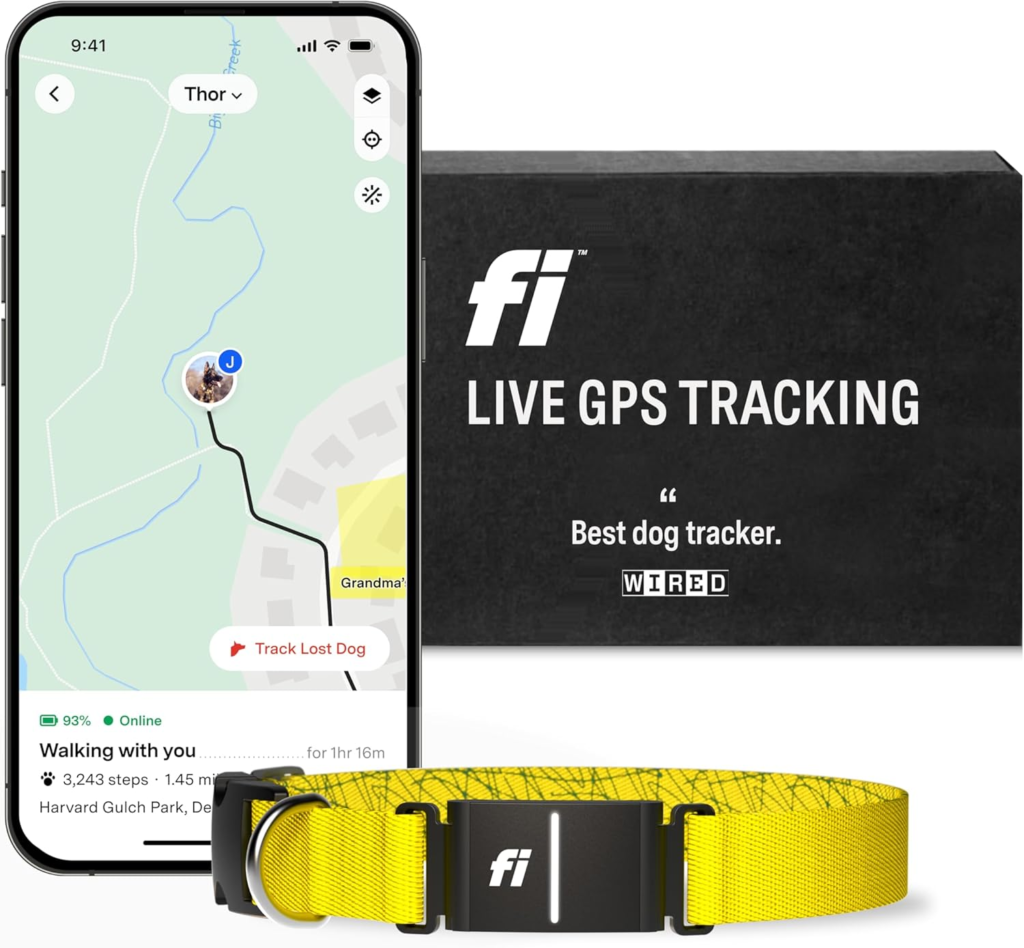
The Fi Series 3 is the most advanced activity tracker available. It counts steps, tracks sleep, detects whether your dog is resting or active, and boasts exceptional battery life of up to 3 months in power-saving mode. Its sleek design makes it available as a collar attachment or as a standalone unit. Price: €150 plus an annual subscription.
Kippy Vita — The most complete for health
The Kippy Vita combines GPS with advanced health monitoring: it tracks steps taken, calories burned, sleep quality, and stress levels. It’s an attractive option for owners who want both location and wellness data. Price: €60-80 plus subscription.
How to set up secure zones
One of the most useful features of any GPS tracker for dogs is the ability to set safe zones or geofences. You define a perimeter on the map around your house, garden, or usual park, and receive an immediate notification if the collar crosses that boundary. This is an essential feature for dogs that live in houses with gardens or that tend to run off-leash in familiar areas.
Setup is simple via the app: draw the perimeter on the map, give it a name (‘Home’, ‘Garden’, ‘Park’), and activate notifications. Some models allow you to define different types of alerts depending on the area: vibration, sound, or silent notification.
Tips for getting the most out of your GPS
- Keep the collar snug but comfortable: the tracker should not move or rotate.
- Charge the battery every week, even if it hasn’t run out, to maintain its health.
- Activate low power mode when the dog is at home and active tracking mode on outings.
- Set up safe zones from day one to receive immediate alerts.
- Download the route history periodically to analyze your dog’s movement patterns.
Is the monthly cost worth it?
The biggest deterrent for many people is the monthly subscription. Between 3 and 10 euros a month might seem like a lot for a gadget. But you have to put it in perspective: searching for a lost dog can cost hundreds of euros in posters, rewards, and time. The emotional stress is priceless. For a dog owner, the peace of mind of knowing their pet’s location at all times is more than worth the subscription cost.
Conclusion
A GPS tracker for dogs is one of the smartest investments a pet owner can make in 2026. The Tractive GPS Dog 4 is our top recommendation for its balance of price, features, and coverage. For smaller breeds or those seeking more health data, the Kippy Vita or the Fi Series 3 are equally solid options. Whatever you choose, knowing your dog’s location in real time provides irreplaceable peace of mind.
Frequently asked questions
Does GPS work in areas without coverage?
No. GPS trackers for dogs require mobile network coverage to transmit their location. In areas without 4G coverage, the device will save the location and send it when it regains a signal.
How long does the battery last on a GPS tracker for dogs?
It depends on the model and usage mode. In normal mode, most trackers offer between 3 and 7 days of battery life. In active tracking mode, battery life can be reduced to less than 24 hours.
Is the GPS suitable for small dogs?
Yes, there are models specifically designed for small breeds. Look for trackers that weigh less than 25 grams and have a compact design. Tractive and Weenect have lightweight options for dogs under 5 kg.
Can I use GPS without a monthly subscription?
Not in most models. The tracker needs a data SIM to transmit its location, and that service is paid for via subscription. Some models allow you to insert your own SIM, although this option is becoming less common.
Posts relacionados
AI ecosystems for pets: when the smart home starts taking care of your animal
May 26 , 2026
From automation to prevention: how artificial intelligence is turning every household routine into a health signal for your pet. For…
Read moreTop robot vacuum cleaners for pet hair
May 26 , 2026
If you have a dog or cat, you already know what it's like to find fur on the sofa, carpet,…
Read more